

A homeowners policy is a collection of protections with different jobs. Use this guide to connect the house, your belongings, liability, and temporary living costs to the questions you want answered before choosing or renewing coverage.
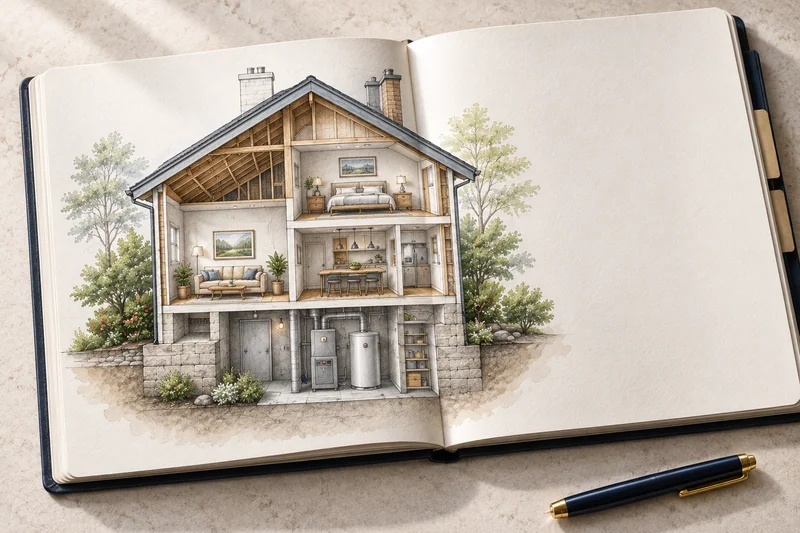
- Structure
- Belongings
- Potential gaps
Use the guide to prepare questions. Your actual options depend on the policy, insurer, and your circumstances.
The useful takeaways.
- Review rebuilding cost separately from the market price or mortgage balance.
- Compare deductibles and claim-settlement terms as well as limits.
- Flood, water backup, and other water losses need specific questions.
In this guide
What the main parts of a homeowners policy do
Start with the declarations page, then ask for the policy forms and endorsements that explain the detail. A familiar coverage label is a starting point, not the complete terms. Different parts of a policy can have different limits, exclusions, and settlement provisions.
Scroll the table to compare all columns.
| Coverage | Purpose | Question to ask |
|---|---|---|
| Dwelling | The insured home and covered parts of its structure. | How was the rebuilding limit estimated, and what features were included? |
| Other structures | Eligible separate structures, such as a detached garage or fence. | Does the limit reflect the structures on my property? |
| Personal property | Eligible belongings, subject to valuation and item limits. | How are depreciation, valuables, and replacement requirements handled? |
| Loss of use | Eligible additional living costs following a qualifying covered loss. | Which dollar and time limits would apply while repairs take place? |
| Personal liability | Specified claims alleging injury or damage for which you are responsible. | Which activities, properties, or situations are excluded? |
| Medical payments to others | Certain guest medical expenses under the policy terms. | Who is eligible, and what limit applies? |
Rebuilding cost and market value answer different questions
The sale price of a home includes factors that are different from the labor and materials needed to rebuild it. A mortgage balance answers a financing question. Neither automatically establishes the dwelling limit you should carry.
Consider a hypothetical home in Carmel with a recently finished basement and a remodeled kitchen. If the policy information still describes the home before those improvements, the next review should start by updating that description. Ask about finishes, additions, detached structures, and any special rebuilding provisions.
Bring roof updates and other material changes to the agency’s attention. A higher limit alone does not explain every loss: ask about the covered causes of damage, exclusions, deductibles, and settlement conditions too.
Replacement cost, depreciation, and your deductible
Replacement-cost and actual-cash-value provisions can lead to different settlements. Actual cash value generally accounts for depreciation. Replacement-cost coverage can have requirements about repair or replacement before all eligible amounts are paid. Ask which treatment applies to the dwelling, roof, and belongings.
For a simple hypothetical $12,000 covered repair, subtracting a $1,000 deductible leaves a different starting amount than subtracting $2,500. That is an illustration of deductibles, not a claim calculation. Limits, depreciation, exclusions, and other provisions can change the amount paid.
Check whether a particular cause of loss has a separate deductible or settlement provision. When comparing quotes, put those differences beside the premium instead of assuming two policies with the same dwelling limit provide the same result.
Water damage: ask about the cause, not just the room
A burst pipe, a backed-up drain, and rising floodwater can all damage a basement, but they raise different policy questions. Standard homeowners insurance typically excludes flood damage. Water-backup protection may involve a separate endorsement with its own terms and limit.
Think about a finished basement containing furniture and home-office equipment. Ask how each possible source of water would be treated, whether a separate flood policy is available, and what restrictions apply below ground level. Do not wait for a forecast to ask when new flood coverage could take effect.
Make belongings and liability part of the review
A room-by-room inventory can help you understand what you own and keep records available if a loss occurs. Note significant purchases, photographs, and supporting records. Ask about item limits for jewelry, collectibles, or other valuables rather than treating the total personal-property limit as the answer for every item.
Also describe activities and changes that could affect liability: a pool, a dog, business use of the home, or a rental property. Ask which situations the home policy addresses and whether a separate business or umbrella discussion is appropriate. An umbrella is additional liability protection, not a general replacement for missing property coverage.
Bring these questions to your home insurance review
Have your current declarations pages, renewal date, and a list of recent changes ready. You do not need to determine the right policy by yourself. A useful conversation puts the limits, exclusions, out-of-pocket costs, and options into the context of your actual home.
- Does the home description include renovations and other structures?
- How would the dwelling, roof, and belongings be settled after a covered loss?
- Which deductible applies to each cause of loss?
- What would apply if the house could not be lived in during repairs?
- Which water and liability questions need another endorsement or policy?
General insurance education from Nauyokas Insurance Agency. Sources and further reading are listed below. Available coverage, eligibility, costs, and claims depend on the actual policy and circumstances. Hypothetical examples do not determine claim outcomes. This is not a personalized insurance recommendation or legal, tax, or investment advice.
Have a question about your own policy? Talk with the appropriate advisor.